A Personal Deep Dive into Print Stability
When I started my journey into advanced 3D printing, printing quality was a constant battle. I bought high-quality PLA, and my first few prints were flawless. But the magic started fading after the first few weeks. My prints, which should have been perfect, started to show subtle layer separation, warping, or inconsistent extrusion. I assumed the issue was my printer’s calibration, but every time, the problem seemed to resurface, regardless of model or printer. I was spending hours troubleshooting, and eventually, I had to face the uncomfortable truth:
The problem wasn’t the printer, but the filament itself.

It was a gut instinct that led me to suspect the environment. I started treating my filament storage like a controlled laboratory environment. I stopped just tossing my spools into a drawer and started subjecting them to rigorous, real-world aging tests.
Over several weeks, I discovered through basic storage methods that humidity control is key. If the filament is exposed to fluctuating conditions, it starts to degrade, leading to predictable printing failures down the line. The answer seemed to point to a Dryer box, so I immediately searched Amazon.
The SUNLU Filament Dryer S4

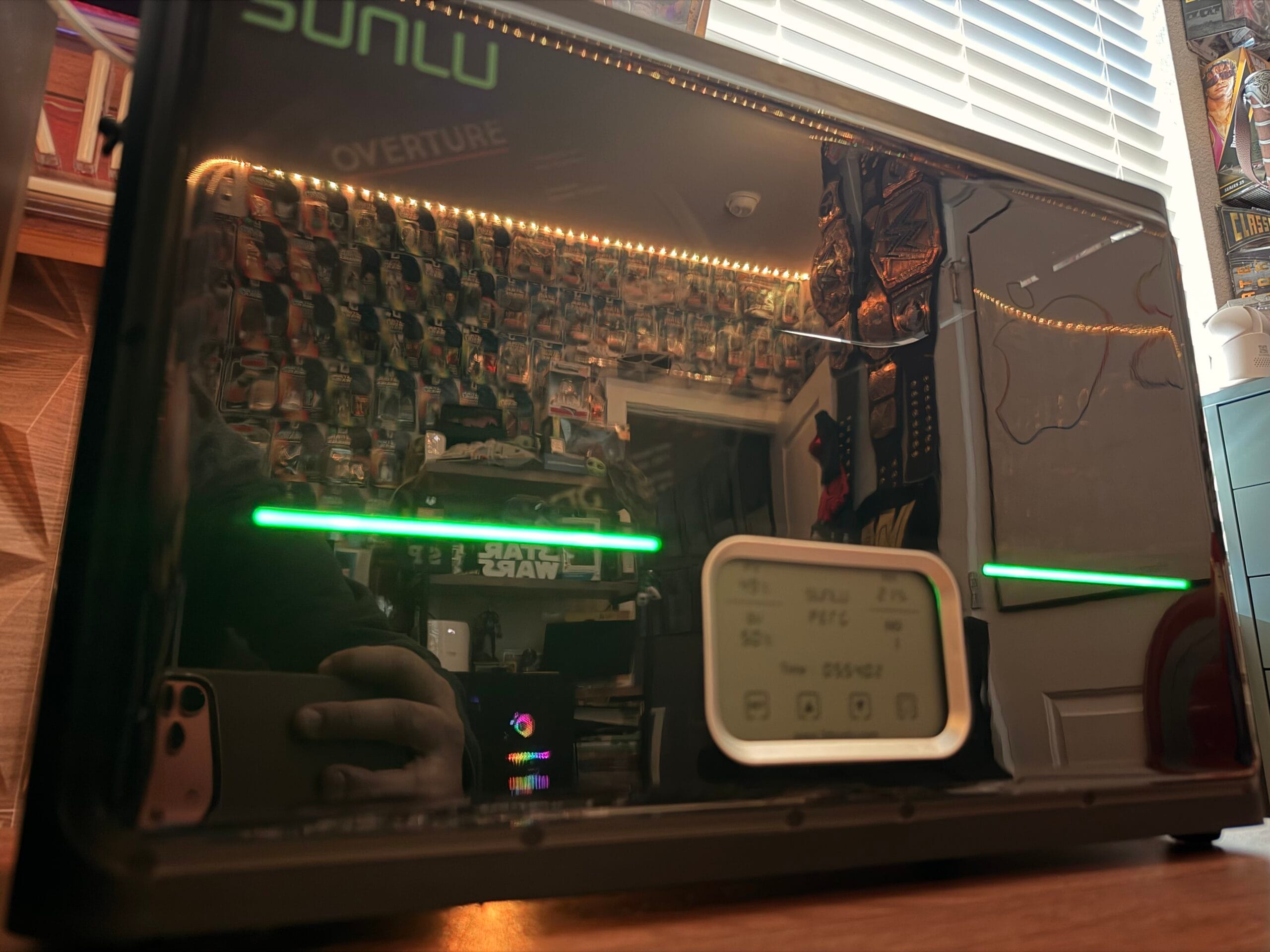
After trying several DIY methods using silica packets for moisture control, I found the SUNLU Filament Dryer S4 while browsing Amazon. The S4 allows up to 4 spools to be stored and heat dried for up to 99 hours (not sure if you need to run it that long). I found the default 50 Celsius setting worked well for PETG, and set it to bake overnight for 6 hours. By the next morning, the box had cooled to around 42 Celsius, with the PETG and box still fairly warm inside.
The test print was noticeably better after heating overnight. The tomato tower printed without any noticeable gaps, and it was able to print the rest of the spool without a single failure. This felt like progress, especially when one of the spools I used was a new in box 2018 Polaroid PETG. It printed the first time without any issues, with the same quality of the newer PETG I printed just prior to it.
Why I Recommend This System
After extensive testing, I cannot overstate the critical nature of a proper enclosure. It’s not just a humidity chamber; it’s a stabilizing ecosystem. The product I use for optimal storage provides consistent, controlled environmental conditions. It stabilizes the moisture and temperature, ensuring that the filament maintains its polymer integrity until the moment it leaves the spool. It’s the single most important investment in your 3D printing arsenal. If you are tired of sudden, inexplicable print failures—failures that make you question everything—I urge you to treat this hardware as your final barrier against poor material quality. For readers who want the exact same stability I’ve achieved with this system, here is my trusted source. Check out my Affiliate link for the SUNLU Filament Dryer S4. Choosing reliable storage isn’t a luxury; it’s a 3D hobbyists necessity for consistent, high-quality prints.
Shop curated picks on RIOWARE
Want the short path from research to purchase? Browse the products and accessories we curate for practical performance, compatibility, and everyday reliability.
Disclosure: RIOWARE participates in affiliate programs. Prices and availability are confirmed on Amazon at checkout.